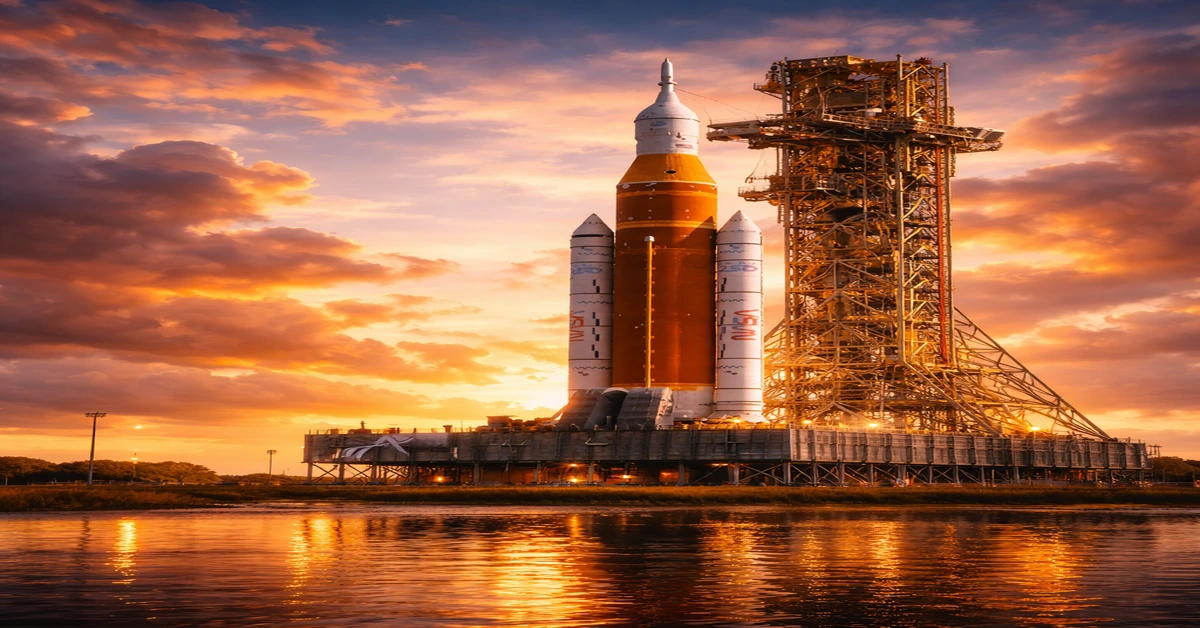
NASA Artemis II Launch Pad — The Gateway to Human Return to the Moon
Introduction
NASA’s Artemis II Launch Pad is not just a structure — it’s the physical starting point for humanity’s next giant leap. As part of the Artemis program, this launch pad will send the first crewed spacecraft beyond low Earth orbit since Apollo 17 in 1972. With cutting-edge technology, deep historical roots, and powerful engineering capabilities, the Artemis II Launch Pad stands as a symbol of exploration, innovation, and human aspiration.
This article covers everything — launch pad history, design, infrastructure, technology, mission role, safety systems, environmental challenges, crew processing, recovery operations, and the future of lunar exploration. If you want a complete resource on the Artemis II Launch Pad, this is your ultimate guide.
1. What Is the NASA Artemis II Launch Pad?
The NASA Artemis II Launch Pad refers to the launch facility at NASA’s Kennedy Space Center in Florida designed to support the Artemis II mission, the first crewed flight of NASA’s Artemis program. This launch pad serves as the platform where the Space Launch System (SLS) rocket and Orion spacecraft are integrated, tested, fueled, and ultimately launched toward lunar orbit.
As part of the Artemis program, this pad represents:
- A gateway to deep space
- A state-of-the-art launch complex
- A fusion of modern and legacy infrastructure
2. History of the Launch Pad – From Apollo to Artemis
The Artemis II Launch Pad is built on the legacy of NASA’s iconic launch infrastructure. The story starts with Launch Complex 39 (LC-39), originally constructed for the Apollo moon landings of the 1960s and 1970s.
Apollo Era
- LC-39A and LC-39B were designed for the Saturn V rockets.
- From Apollo 4 through Apollo 17, these pads launched lunar missions.
- They became symbols of human ambition.
Space Shuttle Era
- After Apollo, both pads were modified for the Space Shuttle.
- LC-39B hosted shuttle missions from 1986 to 2009.
- Legacy systems were upgraded repeatedly.
Transition to Artemis
When the Space Shuttle program ended, NASA began repurposing the launch pads for the Space Launch System (SLS). Significant modernization turned LC-39B into the primary launch pad for Artemis missions.
This history gives the Artemis II Launch Pad a heritage of exploration, connecting Apollo’s success to the future of human spaceflight.
3. Where Is the Artemis II Launch Pad Located?
The Artemis II Launch Pad is located at Kennedy Space Center (KSC) in Merritt Island, Florida, USA.
Key Features of the Location:
- Close proximity to the Atlantic Ocean for safe downrange trajectories
- Tropical climate ideal for launch operations
- Legacy spaceflight infrastructure supporting ground systems
This strategic location enables launches toward both lunar trajectories and deep space with optimal safety and efficiency.
4. Technical Features & Design
The Artemis II Launch Pad combines decades of design evolution with modern engineering:
Core Structural Elements
- Fixed Service Structure (FSS): Provides crew access, fueling lines, and environmental control.
- Mobile Launcher (ML): A transportable launch platform supporting the SLS rocket.
- Flame Deflector System: Redirects exhaust away to protect infrastructure.
- Water Sound Suppression System: Reduces acoustic energy during liftoff.
Modern Upgrades
- Reinforced concrete structures
- Improved electrical and data networks
- Enhanced environmental control systems
- Advanced robotics for inspection and servicing
The pad is engineered for reliability, safety, and rapid turnaround.
5. Ground Support Systems (GSS)
Ground Support Systems make the Artemis II Launch Pad operational:
Communication Networks
- Voice, telemetry, and command systems
- Redundant backups for safety
Power Systems
- High-capacity power distribution
- Backup generators
Environmental Control
- Temperature and humidity management for crew comfort
- Protects avionics and fuel systems from corrosion
Safety Systems
- Fire suppression
- Lightning protection
- Emergency egress systems
GSS ensures that the rocket, spacecraft, crew, and ground team function seamlessly.
6. Crew Access and Safety Systems
Artemis II is the first crewed mission to use this launch pad, so safety is paramount.
Crew Access Tower
- Elevator and stairs for astronauts to reach the Orion spacecraft
- Pressurized service lines for life support
Emergency Egress Systems
- High-speed escape slides
- Rapid evacuation routes
- Redundant paths to safety shelters
Astronauts train extensively with all launch pad safety systems before flight.
7. Fueling Infrastructure
Artemis II uses cryogenic fuels that require precise infrastructure.
Propellants
- Liquid Oxygen (LOX)
- Liquid Hydrogen (LH2)
Fueling Facilities
- Cryogenic tanks on site
- Insulated transfer lines
- Redundant monitoring and control
Fueling is one of the most critical and tightly controlled processes before launch.

8. Environmental and Weather Protection
Florida’s weather presents challenges:
Hurricane Preparedness
- Reinforced buildings
- Evacuation plans
- Advanced forecasting
Lightning Risk
- Lightning towers and conductors
- Protective grounding systems
Even nature must be managed for a successful launch.
9. Artemis II Mission Overview
Artemis II is the first crewed mission in NASA’s Artemis lunar program.
Objectives
- Send a crew around the Moon
- Test Orion life support and navigation
- Validate SLS performance under crewed conditions
Unlike Artemis I (uncrewed), Artemis II will have astronauts aboard.
10. Pre-Launch Countdown Activities
Countdown includes:
- System checkouts
- Crew ingress rehearsal
- Final fueling
- Weather assessment
Each step must be on time and within parameters.
11. Launch Day Procedures
Launch day is high precision:
Final Timelines
- Crew wake-up
- Suiting and check-in
- Weather check
- Final fueling
- Liftoff
Mission Control and ground teams monitor every second.
12. Post-Launch Reset and Recovery
After launch:
- The pad undergoes inspection
- Repairs or upgrades are logged
- Equipment is reset for future missions
Recovery teams work quickly to maintain launch cadence.
13. Artemis Program Goals & Future Missions
Artemis aims to:
- Land humans on the Moon (Artemis III+)
- Establish a lunar gateway
- Use Moon experience for Mars missions
Artemis II Launch Pad prepares the way for all of this.
14. Scientific Impact and Human Exploration
This launch pad isn’t just concrete and metal — it will:
- Expand human presence beyond Earth
- Support lunar science
- Inspire generations
Every launch carries knowledge and ambition.
15. FAQ: Artemis II Launch Pad
Q: Which launch pad is used for Artemis II?
A: Launch Complex 39B at Kennedy Space Center.
Q: What rocket launches from this pad?
A: NASA’s Space Launch System (SLS).
Q: Is this the first crewed mission from this pad since Apollo?
A: Yes.
Q: What makes this pad different from Apollo or Shuttle era?
A: Modern upgrades for SLS and Orion systems.
Q: How is crew safety ensured?
A: Redundant systems, escape routes, and emergency training.
16. Conclusion
The NASA Artemis II Launch Pad is more than steel and concrete — it’s the starting point for the next human journey beyond Earth. With modern technology built on historical legacy, this launch pad bridges Apollo’s success with future lunar exploration and Mars missions.
From ground systems to fueling infrastructure, crew access, safety systems, and mission execution, every component plays a role in the success of Artemis II and beyond.
NASA Artemis II Launch Pad — 2026
1. Introduction – The Next Giant Leap
NASA’s Artemis II Launch Pad is the physical and symbolic gateway to a new era of human space exploration. Set to launch the first crewed spacecraft beyond low Earth orbit since 1972, the Artemis II mission will rely on cutting-edge infrastructure at Kennedy Space Center in Florida. This guide breaks down everything — from launch pad design, history, technology, operations, mission context, safety systems, ground support, fueling, weather challenges, and the future of lunar exploration.
This article is structured for SEO keywords like:
- NASA Artemis II launch pad
- Artemis II pad details
- Artemis lunar launch infrastructure
- Space Launch System (SLS) launch
- Kennedy Space Center Artemis
Read on for a complete, in-depth resource.
2. What Is the NASA Artemis II Launch Pad?
The Artemis II Launch Pad refers to the launch complex designated for the Artemis II mission’s Space Launch System (SLS) rocket and Orion spacecraft. This pad has been modernized from decades of historical use — blending legacy hardware with modern enhancements. It’s where fueling, crew access, testing, and final countdown all converge.
Key functions:
- Host the SLS and Orion stack
- Provide ground support systems
- Enable crew access and safety
- Fuel cryogenic propellants
- Support launch day operations
3. Launch Pad Location: Kennedy Space Center, Florida
The Artemis II Launch Pad is at Launch Complex 39B (LC-39B), part of NASA’s Kennedy Space Center (KSC) on Merritt Island, Florida, USA.
This location was chosen for:
- Proximity to the ocean for safe flight paths
- Long history of human spaceflight launches
- Fully secured NASA facility with advanced support
LC-39B has launched Apollo, Space Shuttle, and now Artemis missions — making it one of the most iconic pads in the world.
4. A Deep History: Apollo → Shuttle → Artemis
4.1 Apollo Era (1960s-1970s)
LC-39 was originally built for the Saturn V rocket that sent astronauts to the Moon during the Apollo Program. The launch pad supported:
- Apollo 4 (uncrewed)
- Apollo 8 (first crewed lunar orbit)
- Apollo 11 (first Moon landing)
- Apollo 17 (last Moon landing)
4.2 Space Shuttle Era (1980–2011)
After Apollo, the pads were adapted for the Space Shuttle. LC-39B launched dozens of shuttle missions, including science missions and ISS assembly flights.
4.3 Transition to Artemis
When the Shuttle program ended in 2011, NASA began reconfiguring LC-39B for the Space Launch System (SLS) — a more powerful, deep-space capable rocket. The pad underwent:
- Structural reinforcement
- New fueling systems
- Modern communication networks
- Environmental control upgrades
This blending of legacy and innovation makes Artemis II Launch Pad uniquely capable of human lunar-class missions.
5. Launch Pad Components (Technical)
5.1 Fixed Service Structure (FSS)
The FSS provides:
- Crew access elevators and platforms
- Instrument connections
- Environmental systems
- Emergency evacuation paths
The structure supports final servicing and inspection before launch.
5.2 Mobile Launcher (ML)
The ML is a transportable launch platform that:
- Carries the rocket stack
- Provides umbilicals for power, fuel, data
- Moves the vehicle from assembly area to pad
5.3 Flame Deflector & Sound Suppression
To handle the massive 8 million+ pounds of thrust from SLS engines:
- A flame deflector redirects exhaust
- A water sound-suppression system reduces acoustic shock
5.4 Lightning Protection
Florida’s stormy climate means lightning towers and grounded conductors protect the rocket and crew systems.

6. Ground Support Systems (GSS)
Ground Support Systems are the backbone of pad operations. They include:
6.1 Communication Networks
- Voice and data links to Mission Control
- Real-time telemetry monitoring
- Redundant signal paths
6.2 Power Distribution
- Primary power from grid
- Backup generators
- Uninterruptible systems for critical subsystems
6.3 Environmental Controls
Crew and avionics need controlled temperature and humidity:
- HVAC systems inside the FSS
- Thermal protection for electronics
- Pressurized lines to support life-support hardware
6.4 Safety and Fire Systems
Automated fire suppression, gas monitoring, and emergency alarms are all networked to ensure crew and pad integrity.
7. Crew Access and Safety
Artemis II will carry astronauts to lunar orbit, so access and safety are key.
7.1 Crew Access Tower
The tower has:
- Elevator access
- Stairs and platforms
- Pressurized service connections
Astronauts use these to board Orion before launch.
7.2 Emergency Egress
For rapid evacuation:
- High-speed escape slides
- Rope ladders
- Protected evacuation shelters near pad
These systems are tested repeatedly with crew during rehearsals.
8. Fueling Infrastructure
The SLS uses cryogenic propellants that require precise handling.
8.1 Propellants
- Liquid Oxygen (LOX)
- Liquid Hydrogen (LH2)
These are stored in giant insulated tanks near the pad.
8.2 Fuel Lines & Valves
Thermal protection on lines prevents boil-off and ensures safe transfer under tight controls.
8.3 Safety Monitoring
Sensors track pressure, temperature, leaks, and flow in real time.
Fueling operations are tightly timed in the countdown.
9. Weather & Environmental Challenges
Florida weather shapes pad operations.
9.1 Hurricanes & Tropical Storms
The pad’s infrastructure must withstand high winds and saltwater exposure. NASA has:
- Reinforced steel structures
- Evacuation contingency plans
- Rapid securing of hardware
9.2 Lightning Risk
Lightning systems channel strikes away from sensitive hardware.
9.3 Heat & Humidity
Thermal shielding and HVAC keep electronics and crew connections stable.
10. The Artemis II Mission Overview
Artemis II is NASA’s second Artemis mission, but the first crewed flight in the program.
10.1 Mission Objectives
- Carry a 4-astronaut crew around the Moon
- Validate life-support systems
- Test navigation and communication systems
- Prepare for future lunar landings
10.2 The Crew
Four astronauts will fly in Orion for several days, looping around the Moon before returning to Earth.
10.3 Spacecraft & Rocket
- Space Launch System (SLS) — the most powerful NASA rocket
- Orion spacecraft — crew capsule with life-support
11. Launch Preparations & Countdown
Artemis II follows a rigorous timeline:
11.1 Pre-Launch Tests
- Integrated system checks
- Communication checks
- Life-support validation
11.2 T-Count Activities
- Final fueling
- Weather evaluation
- Crew boarding
- Go/No-Go polls
Each event is tightly scheduled, and automated systems monitor hundreds of parameters.
12. Launch Day Protocol
On launch day:
- Crew suits up
- Board Orion via the access tower
- Final checks begin
- Fueling completes
- SLS engines ignite
- Liftoff at scheduled T-0
Countdown is mission control synchronized with pad control systems.
13. Flight Phases After Launch
After liftoff:
- SLS first stage burns
- Orion separates and enters lunar trajectory
- Spaceship loops around the Moon
- Re-entry and splashdown back on Earth
Recovery teams collect Orion from the ocean.
14. Post-Launch Pad Operations
Once Artemis II clears the pad:
- Engineers inspect the pad
- Repair any launch wear
- Reset systems for Artemis III and beyond
This ensures rapid readiness for future missions.
15. Artemis Program Goals & Lunar Return
NASA’s Artemis program is designed to:
- Return humans to the lunar surface
- Build a sustained presence
- Establish a lunar Gateway station
- Enable Mars missions
Artemis II Launch Pad is central to this progress.
16. Scientific Impact & Global Context
Artemis missions advance:
- Lunar science
- Human physiology research
- Deep space exploration tech
International partners contribute hardware and research.
17. Economic & Industrial Impact
The Artemis program boosts:
- High-tech engineering jobs
- Space supply chain growth
- STEM education interest
- Commercial space services
The launch pad itself supports thousands of jobs and technological spin-offs.
18. Challenges and Risk Mitigation
NASA manages risk via:
- Redundant systems
- Continuous testing
- Safety protocols
- Real-time monitoring
Every detail from wiring to life-support is tested.
19. Artemis II Launch Pad FAQ (Extended)
Q: Where does Artemis II launch from?
A: Launch Complex 39B at Kennedy Space Center.
Q: Has this pad been used before?
A: Yes — Apollo and Shuttle missions.
Q: What rocket launches from the pad?
A: Space Launch System (SLS).
Q: Who operates the launch pad?
A: NASA with contractor support.
Q: Why is Artemis II important?
A: First crewed deep space flight since Apollo.
Q: How big is SLS?
A: One of the most powerful rockets ever built.
Q: How does NASA ensure safety?
A: Redundancy, escape systems, training.
20. Conclusion — A New Frontier
The NASA Artemis II Launch Pad stands as a monument to human exploration. With modern systems built on historical legacy, it enables the next giant leap — putting astronauts on lunar missions that lay the foundation for Mars and beyond.
This launch pad isn’t just a physical structure — it’s the starting point for humanity’s future in deep space.


